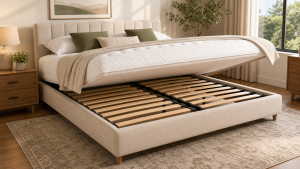
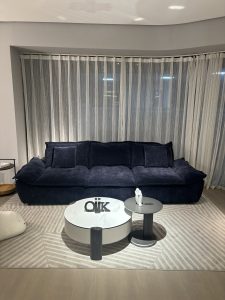
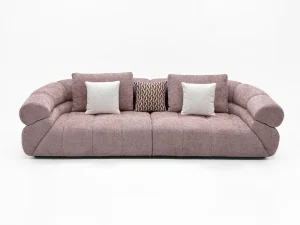
Match effective seat depth, lumbar contact, back angle and cushion stability to the viewer's normal posture.
Quick Answer
Match effective seat depth, lumbar contact, back angle and cushion stability to the viewer's normal posture. Start with measured conditions and the manufacturer’s instructions; appearance alone cannot confirm fit, comfort or safe maintenance.
Why This Problem Happens
Furniture is a system of dimensions, materials, supports and repeated user loads. A photograph can hide the widest point, the occupied seat position, a moving mechanism or contamination below the surface. For sofa back support for tv watching, document the room, intended users, daily activities and current symptoms before choosing a solution.
Separate what is visible from what must be verified. Upholstery can conceal frame joints, foam recovery, support spacing and moisture. Room photos can also distort scale. Record measurements and test one change at a time so a temporary improvement is not mistaken for a complete answer.
Measurements and Layout Checks
Evaluate the complete seating system. Test occupied seat height, usable depth, back angle, edge support, cushion recovery and suspension together. Draw the room to scale and mark the product’s complete outside dimensions, not only the usable seat or mattress size.
Four Checks to Record
- Record the exact room and product dimensions relevant to sofa back support for tv watching.
- Test occupied seat height, usable depth, back angle, edge support, cushion recovery and suspension together.
- Test the proposed solution under normal daily use before ordering or modifying furniture.
- Keep photos, sample references and supplier instructions with the final specification.
Useful Clearance Ranges
For early planning, allow roughly 14-18 inches (36-46 cm) between a sofa and coffee table and about 30-36 inches (76-91 cm) for a main walkway where the room permits. These are planning ranges, not universal rules; accessibility needs, reclining parts, doors and local requirements can demand more space.
Materials, Construction and Comfort
Review the frame, suspension or slats, cushion or mattress support, upholstery, seams, legs and hardware as one system. Ask which components are replaceable. For fabric, compare abrasion, pilling, snagging, seam slippage, colorfastness and the cleaning code. A high abrasion figure alone does not prove that a textile will resist pet claws, stains or dye transfer.
Comfort also changes under load. Evaluate occupied seat height, effective depth, back angle, edge support and recovery after at least several minutes. For beds and sleepers, confirm the mattress support, ventilation and any limits imposed by a folding or lift mechanism.
Step-by-Step Practical Plan
- Photograph the current room or condition and note the date.
- Measure the complete footprint, access route and any moving envelope.
- Read the care label, assembly guide and warranty before cleaning or repair.
- Test the least invasive suitable action in a hidden or low-risk area.
- Allow the product to recover or dry fully, then compare the result with the starting record.
- Stop and ask the supplier or a qualified technician when the frame, mechanism, wiring, mold or structural support may be involved.
Cleaning and Maintenance
Vacuum with a suitable upholstery tool, working along seams without pulling loose threads. Use only a cleaner permitted by the written fabric code, apply it to a cloth when practical, and avoid saturating padding or wood. Blot instead of aggressive rubbing. Use fans and normal ventilation for complete drying; do not apply uncontrolled heat.
For recurring odor or stains, identify the source. Fragrance may mask contamination without removing it. Smoke, urine, mildew or deeply absorbed body oil can reach batting, foam and frame components and may require professional assessment or replacement of affected layers.
Specification Checklist
| Item | How to Verify | Why It Matters |
|---|---|---|
| Room fit | Tape the complete footprint and moving envelope on the floor | Reveals blocked routes before delivery |
| User fit | Test the intended posture, reach and movement | Confirms comfort for real users |
| Material | Approve a current physical sample and its care code | Avoids color and cleaning surprises |
| Construction | Request frame, support, cushion and hardware details | Shows how the product carries repeated load |
| Access | Measure every door, turn, stair, lift and carton | Prevents delivery failure |
| Service | Confirm warranty, parts and cleaning instructions | Supports long-term maintenance |
Buyer Checklist
- Measure the room, delivery route and final footprint twice.
- Request a dimensioned drawing and current upholstery sample.
- Confirm the frame, support, cushion or mattress construction.
- Check cleaning codes, replacement parts and warranty exclusions.
- Test the arrangement during real activities, not only while standing in a showroom.
- Record the exact model, module orientation, fabric code and revision.
B2B Sourcing Checklist
For project quantities, convert the decision into written acceptance criteria. Approve drawings, material samples and a pre-production unit before bulk production. Define color tolerance, seam alignment, foam or support specification, hardware, packaging, carton marking and inspection method.
- Confirm MOQ, lead time, packing ratio and loading information.
- Specify testing reports relevant to the market and use case.
- Inspect access-critical dimensions and module labels.
- Agree on spare covers, legs, connectors, hardware and service parts.
- Keep an approved sample and signed specification for final inspection.
Related BONLON Products and Resources
- Modular Sectional Couch 2236 | Flexible Living Room Sofa
- Fabric sofa collection
- Modular sofa collection
- Sectional sofa collection
- Folding sofa bed collection
- Browse all furniture products
- Request drawings and samples
Frequently Asked Questions
What is the first step when dealing with sofa back support for tv watching?
Evaluate the complete seating system. Match effective seat depth, lumbar contact, back angle and cushion stability to the viewer's normal posture.
Can standard furniture dimensions be trusted?
Use standard ranges only for early planning. Confirm the selected model's drawing, occupied dimensions and moving envelope.
How can the idea be tested before ordering?
Tape the complete footprint on the floor, simulate doors and moving parts, then repeat the normal route with the objects people carry.
What should a commercial buyer request?
Request signed drawings, current material samples, construction and test data, carton dimensions, tolerances, warranty terms and a pre-production approval sample.
Final Recommendation
Match effective seat depth, lumbar contact, back angle and cushion stability to the viewer's normal posture. Choose the option that passes the room, user, material and maintenance checks together. For a project review, send BONLON the floor plan, target dimensions, upholstery requirements, expected use and order quantity.