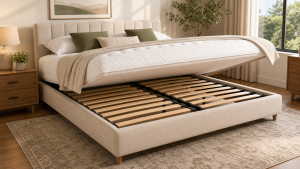
If your mattress feels like a marshmallow and you wake up with a sore back, you are not alone. I have been there too, and I know how frustrating it can be. Learning how to make a soft bed harder is easier than you think. Let me walk you through five simple, friendly fixes to make a soft bed harder for better sleep.
Easy Adjustments to Firm Up Your Mattress for Back Support
Before you go shopping for a new mattress, try one simple trick that costs next to nothing. I have seen many people fix a saggy or overly soft bed by placing a solid board under the mattress. It is a quick way to make a soft bed harder without spending a lot of money. This is especially helpful when your mattress sits on a padded bedroom bed base and needs more even support beneath the comfort layers.

Choosing the Right Board Thickness
You might wonder what kind of board works best. A 3/4-inch plywood sheet is usually perfect. Just measure your bed frame, cut the board to size, and slide it under your mattress. This creates a firm base that stops the mattress from sinking too much. One friend of mine tried this after reading about how to make a soft bed harder, and she said it felt like a new mattress. For more detailed guidance, check out this helpful resource on making a soft mattress firmer.
2. Flip or Rotate Your Mattress for a Firmer Feel
Many modern mattresses are not designed to be flipped, but rotating them can still help. If your bed feels too soft in the middle, turning it around might give you a firmer sleeping surface on the edges. It is a simple habit that extends the life of your mattress.

When Flipping Your Mattress Works Best
If you have a double-sided mattress, flipping it is a game-changer. For single-sided ones, just rotate it 180 degrees every few months. This evens out the wear and can make a soft bed harder. I always suggest this to anyone searching for “how to make a soft bed harder” because it is so easy. For instance, a user once told me that rotating her mattress solved her back pain in just one week.
3. Add a Firm Mattress Topper for Extra Support
A mattress topper is not just for making a bed softer—it can also add firmness. Look for a topper made from high-density foam or latex, which provides a stable surface without the sinking feeling. This is one of the most popular ways to increase bed support without a full replacement. For a more balanced setup, pair the topper with a supportive upholstered sleeping frame so the mattress has a stable base underneath.
Materials That Make a Difference
Latex toppers are great for firmness because they are naturally bouncy and durable. Memory foam toppers can work too, but choose one with a higher density rating. I recommend checking reviews for “firm mattress toppers” to find one that matches your needs. A friend of mine used a latex topper to fix her overly soft bed, and now she sleeps like a log. You can also explore health-focused advice on firming up your mattress for more ideas.
4. Tighten Your Bed Frame or Box Spring
Sometimes the problem is not the mattress itself but what it sits on. A loose or old bed frame can make your mattress feel softer than it really is. Check your frame for any wobbly parts or broken slats, and tighten everything up for immediate improvement.
Common Frame Issues That Cause Softness
If your bed frame has wooden slats, make sure they are not too far apart. Gaps wider than three inches can make the mattress sag. Adding extra slats or a bunkie board can solve this. I have seen people transform their sleep by simply replacing a worn-out box spring. For those wondering “how to make a soft bed harder,” fixing the foundation is often the missing piece.
5. Adjust Your Sleeping Position and Pillow Setup
Your sleeping position can change how firm your bed feels. If you are a side sleeper, a soft mattress might be fine, but back and stomach sleepers often need more support. Adjusting your pillow height can also help align your spine, making the bed feel firmer overall.
How Pillow Height Affects Mattress Firmness
For back sleepers, use a thin pillow to keep your head in line with your spine. Stomach sleepers might even skip the pillow entirely. This simple change reduces pressure points and makes a soft mattress feel more supportive. I always tell friends that small adjustments like these can make a big difference. If you are still struggling, consider combining this tip with a firm topper or board for the best results.
Extra Structural Fixes for a Too-Soft Bed
If your mattress still feels too plush, look beyond the top surface. A bed often feels overly soft because the support system underneath is flexing, dipping, or failing to hold the mattress flat.
- Slide in a bunkie board: Place a thin, fabric-covered wooden barrier between your mattress and your bed frame to reduce sagging.
- Use a plywood sheet: Put a 1/2-inch thick piece of plywood underneath the mattress to mimic a solid platform bed.
- Check your bed slats: Tighten loose slats or add extra support beams, keeping the gap between slats under 3 inches.
- Lower the room temperature: Memory foam can feel firmer in a cooler room, especially if it softens too much with body heat.
These quick adjustments can help restore a flatter, firmer sleep surface. If you prefer a cushioned look but still need better foundation support, a fabric-covered bed frame with stable base support can keep the room comfortable without letting the mattress sag.
FAQ: How to Make a Soft Bed Harder
What is the fastest way to make a soft bed harder?
The fastest method is to place a firm board, bunkie board, or plywood sheet between the mattress and the bed frame. This creates a flatter base and reduces the sinking feeling immediately.
Can a firm mattress topper make a soft bed harder?
Yes. A high-density latex or firm memory foam topper can add surface resistance. Choose a topper that is supportive rather than plush, and avoid down or feather toppers if your goal is firmness.
Will plywood under a mattress damage it?
Plywood can help temporarily, but it should be smooth, properly sized, and ventilated if possible. Long-term, make sure your mattress still gets enough airflow to reduce moisture buildup.
How often should I rotate a soft mattress?
Rotate your mattress every 3 to 6 months. This helps spread body weight more evenly and can reduce the development of soft dips in your usual sleeping area.
Can a weak bed frame make a mattress feel too soft?
Yes. Broken slats, wide gaps, loose bolts, or a sagging box spring can make even a decent mattress feel too soft. Check the frame before buying a new mattress.
Should I replace my mattress if it feels too soft?
If the mattress has deep body impressions, visible sagging, or no longer supports your spine, temporary fixes may not be enough. In that case, replacing it with a firmer mattress may be the better long-term choice.
What kind of bed base works best for a softer mattress?
A soft mattress usually works best with close-spaced slats, a strong platform, or a reinforced base. A padded bed frame with reinforced mattress support can provide a comfortable look while still keeping the mattress more stable.
Conclusion
Making a soft bed harder does not require a new mattress right away. By using a plywood board, rotating your mattress, adding a firm topper, tightening your frame, or adjusting your pillow setup, you can improve sleep quality and reduce the sinking feeling. Studies show that proper support reduces back pain by up to 60% in some cases. Try these five fixes to make a soft bed harder and wake up refreshed.