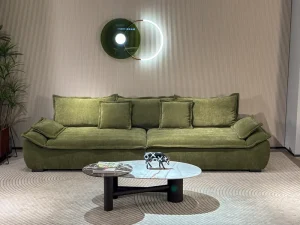
Apartment Living Room Furniture: Direct Design Answer
apartment living room furniture works best when the room is planned around real measurements, daily habits, and the relationship between furniture pieces. The practical answer is to start with furniture scale, layout, color, lighting, storage, and daily function, then choose pieces that make the room feel compact, intentional, and useful in real rooms. A beautiful room can still fail if the coffee table is too far away, the rug is too small, the curtains shorten the wall, or storage does not match the way people actually live.
For room planning topics, the practical order is layout first, then furniture scale, then color, lighting, textiles, storage, and decorative finishing. In a home, the same choice has to support comfort and personal style. In an apartment, it also has to respect space and delivery limits. In a hotel, showroom, or furnished rental, it needs to be durable, easy to clean, and simple for many different people to understand.
Quick Answer
The fastest way to make apartment living room furniture useful is to treat it as a planning decision rather than a decoration decision. Measure the room, identify the main seating area, decide what the eye should notice first, and leave enough space for people to move naturally. Then add color, texture, lighting, and accessories in layers. If a piece looks attractive but blocks a walkway, catches clutter, or creates awkward proportions, it is not the right choice for that room.
For furniture examples, a balanced living room can start with Washable Cloud Sofa 2211A when the room needs a refined sofa anchor. A more flexible layout can be compared with Modular Sectional Couch 2236, while Cloud Linen Sofa 2285 is useful when the space needs softer comfort and relaxed daily seating.
Key Takeaways
- Start with measurements before choosing style, because proportion decides whether the room feels natural.
- Use one clear focal point, then support it with lighting, textiles, surfaces, and storage.
- Leave comfortable walking space around the main seating area instead of filling every open corner.
- Choose colors and materials that match the room’s light, cleaning needs, and daily users.
- For project or retail buyers, request dimensions, fabric options, carton data, maintenance notes, and replacement support.
What Strong Room Guides Usually Cover
The best design guidance does not stop at inspiration photos. It explains proportion, function, common mistakes, and how to apply the idea in different room sizes. For apartment living room furniture, the useful structure includes a direct answer, a measurement section, a styling section, a material or finish section, common mistakes, and a practical checklist. That structure helps both homeowners and B2B buyers make decisions with less guesswork.
Common advice across strong home design pages often focuses on editing clutter, using the right scale, choosing a few meaningful objects, and letting furniture support how the room is used. The missing piece is often the buyer’s practical side: delivery access, cleaning, durability, replaceable parts, and whether the same idea works in apartments, hotels, show flats, or furnished rental units. That is where a more complete plan becomes valuable.
Room Measurement and Layout Planning
Good layout begins with a tape measure. Measure the wall length, door swing, window position, walkway, TV distance, and the space between seating and tables. Most living rooms feel better when the main walkway has about 30 to 36 inches where possible. Between a sofa and coffee table, 16 to 18 inches is usually comfortable. Side tables should be close enough to reach from the seat, and the top should sit near the height of the sofa arm or slightly lower.
In a small room, choose fewer pieces with stronger purpose. In a large room, use rugs, lighting, and modular seating to create zones. Open-plan spaces need even more discipline because living, dining, and kitchen areas can visually compete. A sofa such as Luxury Sectional Sofa 2285A can define the seating area, while Grande Sofa large modular couch can help when the room needs a more generous lounge feeling.
Practical Measurement Guide
| Area | Useful Guideline | Why It Matters |
|---|---|---|
| Main walkway | 30-36 inches when possible | Keeps the room comfortable and reduces blocked movement |
| Sofa to coffee table | 16-18 inches | Makes the table reachable without crowding knees |
| Rug under seating | At least front legs on the rug | Connects furniture into one visual group |
| Curtain rod width | Extend beyond the window frame | Makes windows feel wider and lets more light show |
| Wall art above furniture | Relate width to the furniture below | Prevents art from looking too small or disconnected |
Furniture Scale and Proportion
Scale is where many rooms go wrong. A large sofa can feel luxurious in a showroom but heavy in a narrow apartment. A small table can look cute online but disappear in front of a deep sectional. A tall cabinet can help storage but overwhelm a low-ceiling room. For apartment living room furniture, compare every piece against the largest furniture item first, then check whether the smaller pieces support it or fight with it.
Proportion also affects comfort. A table that is too high makes the room feel stiff. A chair that is too low can look disconnected beside a sofa. A rug that stops before the furniture legs can make the seating area look unfinished. When in doubt, sketch the room and mark the largest pieces first. Then add surfaces, lighting, and decorative objects only where they solve a real need.
Scale Mistakes to Avoid
| Mistake | What Happens | Better Choice |
|---|---|---|
| Too many small items | The room feels busy and less intentional | Use fewer pieces with clearer function |
| Oversized furniture | Walkways become tight and the room feels heavy | Check depth and delivery path before buying |
| Undersized rug | Furniture appears disconnected | Choose a rug that reaches under key seating pieces |
| Short curtains | The wall feels cut off | Use longer panels and a higher rod when possible |
| Random wall decor | The focal point becomes unclear | Group decor around furniture width and eye level |
Color, Texture, and Material Planning
Color should respond to natural light. North-facing rooms often need warmer whites, soft beige, cream, or wood tones to avoid looking cold. Bright rooms can handle deeper neutrals, muted greens, warm browns, or stronger contrast. Texture is what keeps neutral rooms from feeling flat. Mix smooth surfaces, woven textiles, matte finishes, soft upholstery, and one or two sculptural elements.
For apartment living room furniture, the safest long-term approach is to choose a main neutral base, repeat one warm material, and add contrast through smaller pieces. A beige sofa, wood coffee table, textured rug, linen curtain, and darker accent chair can feel layered without becoming loud. If the room needs a stronger anchor, Saint Germain Sofa for hotel style rooms can be compared with other sofa options for a more substantial furniture base.
Lighting and Atmosphere
Lighting changes how every material looks. A room with only overhead lighting often feels flat at night. A better plan uses ambient light for general brightness, task light near reading or work areas, and accent light for shelves, art, plants, or textured walls. Warm light usually makes living rooms feel more relaxed, while cooler light may feel sharper and less comfortable in evening spaces.
Place floor lamps where people actually read or talk. Use table lamps to soften corners. Add indirect light if the ceiling feels low or the room needs a calmer glow. For small apartments, a slim floor lamp or wall light can save surface space. For hotels or furnished rentals, choose lighting that is easy to maintain and difficult to misuse.
Lighting Layer Checklist
| Layer | Best Use | Common Mistake |
|---|---|---|
| Ambient | General room brightness | Using it as the only light source |
| Task | Reading, working, games, side tables | Placing it too far from the seat |
| Accent | Art, shelves, plants, textured walls | Highlighting too many objects at once |
| Decorative | Visual mood and room personality | Choosing looks without enough light output |
Storage, Clutter, and Everyday Use
A room can look good for one photo and still fail in daily life. Remote controls, chargers, blankets, toys, books, pet items, shoes, and mail all need a place. The best storage plan separates display from daily use. Open shelves are good for books, ceramics, and a few meaningful objects. Closed cabinets are better for cables, supplies, games, and items that visually interrupt the room.
For apartment living room furniture, storage should be close to the activity. Keep reading items near the chair, coasters near the table, blankets near the sofa, and entry items near the door. In B2B projects, storage planning reduces maintenance time because staff can reset the room quickly between guests or tenants.
Buying Checklist for Homeowners and B2B Projects
Before buying furniture or decor, confirm how the room will be used. A family with children needs different surfaces than a single-person apartment. A pet-friendly room needs fabrics and rugs that can be cleaned. A hotel lobby needs durable pieces that look good after repeated use. A showroom needs items that tell a clear style story and photograph well.
| Checklist Item | Home Buyer Question | B2B Buyer Question |
|---|---|---|
| Dimensions | Will it fit the room and doorway? | Can the size repeat across units? |
| Material | Can I clean it easily? | Is the material stable across batches? |
| Style | Will it match my existing pieces? | Will it suit the target market? |
| Packaging | Can it be delivered without damage? | What are carton size and loading quantity? |
| Maintenance | How much care does it need? | Can parts or covers be replaced? |
Detailed Styling Plan for a Finished Room
A finished room usually succeeds because the large decisions and small details agree with each other. Start with the largest piece, usually the sofa or storage wall, then choose the rug, table, chair, lighting, curtains, and wall decor in that order. This prevents the room from becoming a collection of unrelated objects. For apartment living room furniture, the goal is to make every item support one main mood and one main function. A relaxed family room can use softer shapes and washable textiles. A formal living room can use stronger symmetry, cleaner surfaces, and more controlled color. A small apartment can use compact surfaces, vertical storage, and lighter materials.
Use repetition to make the room feel intentional. Repeat one wood tone, one metal finish, one fabric texture, and one accent color in more than one place. For example, a warm wood coffee table can connect with picture frames or shelf details. A black floor lamp can connect with table legs or cabinet handles. A beige sofa can connect with curtains, pillows, or a textured rug. Repetition should be subtle; the room should not look like every item came from the same set. A little contrast keeps the space alive.
Editing is just as important as adding. If a shelf has too many small objects, group items by height and leave open space. If a sofa has too many pillows, reduce the number and vary texture instead. If the wall looks busy, use one larger piece of art rather than many small pieces. If the room feels flat, add lighting or a darker accent rather than buying more furniture. These small decisions help apartment living room furniture feel useful and realistic instead of only decorative.
Project Notes for Retail, Rental, and Hospitality Buyers
For retail stores, furnished apartments, hotels, and interior design projects, the same room idea must work across multiple spaces. That means the buying decision should include repeatability, maintenance, and installation. A product that looks beautiful in one sample room may become difficult if the fabric changes between batches, the carton is too large for local delivery, or replacement parts are hard to order. Before confirming a furniture or decor program, record the model name, finish code, fabric code, carton size, cleaning instructions, and lead time.
Rental and hospitality rooms also need simpler reset routines. Staff should know where blankets, cushions, remotes, lamps, and decorative items belong. Surfaces should be easy to wipe. Rugs should not curl at the corners. Curtains should open smoothly. Chairs should be light enough to move but stable enough for daily use. If the design includes mirrors, wall art, or shelves, installation height and fixing method should be documented so every room looks consistent.
For importers and wholesalers, ask whether products can be supplied with consistent packaging, labeling, spare hardware, and clear assembly instructions. Confirm whether fabric swatches can be provided before bulk orders. If the room plan depends on a specific color, request a control sample and keep it for comparison. These details may feel small during selection, but they reduce complaints after delivery and make the design easier to repeat across apartments, showrooms, hotels, and retail displays.
How to Make Apartment Living Room Furniture Work in Different Rooms
In a small apartment, use lighter visual weight, exposed legs, slim tables, rounded corners, mirrors, and higher curtains to make the room feel open. In a family room, choose durable textiles, storage baskets, soft corners, and easy-clean surfaces. In a luxury living room, focus on proportion, fabric quality, layered lighting, and fewer but stronger decorative objects. In a hotel-style space, use symmetry, warm lighting, and upholstery that looks inviting but can handle repeated cleaning.
The same idea can shift by color. Beige and cream create softness. Warm wood adds comfort. Black accents sharpen the room. Earth tones bring a calmer organic feel. Glass and metal can brighten a compact room but may need warmer textiles nearby. The best result is not about copying a look exactly; it is about matching the principle to the room’s size, light, and purpose.
Common Buyer Mistakes
The biggest mistake is choosing individual pieces before deciding the room’s function. A beautiful chair may not work if it blocks the balcony door. A dramatic table may not work if it leaves no leg space. Large wall art may look impressive but feel disconnected if it ignores the sofa width. Another mistake is buying only for current trends without thinking about cleaning, storage, and how the room will age over several years.
- Do not buy furniture without checking doorway, elevator, and stair access.
- Do not use a rug that is too small for the main seating group.
- Do not rely on one overhead light for the entire living room.
- Do not add decor before solving storage and surface clutter.
- Do not choose delicate materials for children, pets, rentals, or hotel spaces without a care plan.
Related Product Recommendations
When a room needs a stronger sofa foundation, compare Washable Cloud Sofa 2211A with Modular Sectional Couch 2236. For softer comfort, review Cloud Linen Sofa 2285 or Luxury Sectional Sofa 2285A. For larger spaces that need more generous seating, Grande Sofa large modular couch and Saint Germain Sofa for hotel style rooms can help buyers compare modular comfort, fabric style, and room presence. Internal product choices should support the room plan instead of distracting from it.
Conclusion
Apartment Living Room Furniture becomes useful when it is connected to real measurements, daily habits, color, light, storage, and maintenance. Start with the room’s purpose, plan the main furniture, then layer tables, rugs, curtains, lighting, wall decor, and textiles in a way that supports how people live. A practical room does not need to be plain. It needs the right proportions, clear focal points, comfortable materials, and a buying plan that works after delivery.
FAQ
What is the best starting point for
Start with room measurements, main seating position, walkway space, natural light, and daily use. After that, choose colors, materials, and decorative pieces that support the layout.
How can apartment living room furniture work in a small apartment?
Use fewer pieces, lighter visual weight, vertical storage, correctly sized rugs, higher curtains, and flexible furniture that does not block doors or walkways.
What should B2B buyers check before ordering furniture or decor?
B2B buyers should confirm dimensions, materials, fabric swatches, carton size, loading quantity, MOQ, lead time, cleaning instructions, and replacement part support.
How do I avoid making the room look cluttered?
Choose one focal point, group smaller objects, leave negative space on tables and shelves, use closed storage for daily items, and remove pieces that do not serve a clear purpose.