Ever wondered how a large sofa arrives in a surprisingly small box? This guide explains the clever process behind compressed sofa technology, from factory packing to your living room setup, in simple, friendly terms.
Understanding the Mechanism of a Compressed Sofa
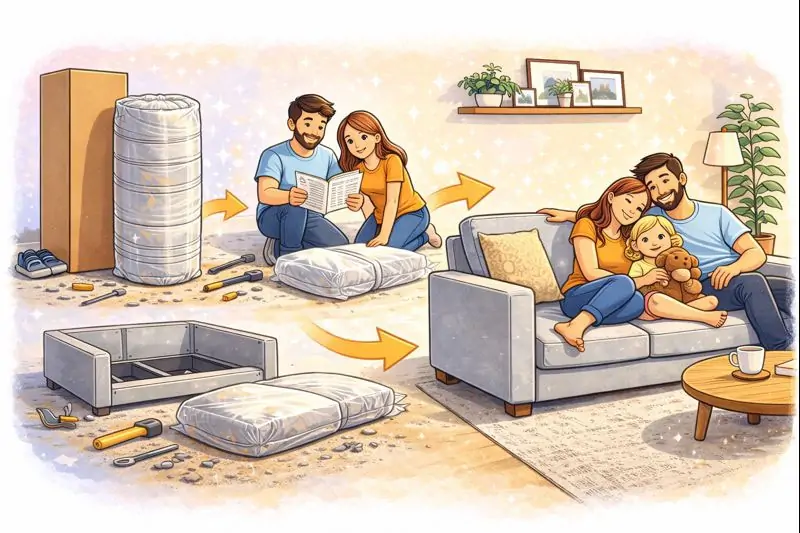
Let’s start by demystifying the main idea. A compressed sofa, often called a vacuum-packed or boxed sofa, works on a principle you might be familiar with from space-saving storage bags. The core furniture is expertly constructed and then placed inside a heavy-duty plastic bag. The air is sucked out, causing the soft materials—primarily the foam—to compress down to a fraction of their original size. This is the fundamental answer to the question, what is the working principle of a vacuum-packed couch?
The Core Concept: Compression
Think of high-resilience foam like a kitchen sponge. When it’s full of air, it’s bulky. Squeeze out the air, and it becomes flat and compact. Modern sofa foam, such as high-density polyurethane, is designed to be compressed and then bounce back to its intended shape. This isn’t magic; it’s smart material science and logistics working together to solve the problem of shipping bulky items efficiently.
The Journey from Factory to Home
The process of how a flat-pack sofa gets to you is a fascinating blend of manufacturing and packaging innovation. It all begins long before the box lands on your doorstep. Understanding this journey helps explain why these sofas are such a popular choice for online furniture shopping.
Step 1: Construction and Foam Types
First, the sofa frame is built, and cushions are crafted using specific types of compressible foam. The quality of this foam is crucial—it must be durable enough to withstand compression and resilient enough to fully expand without permanent damage. You might hear terms like “cold-cure foam” or “high-resilience foam” in product descriptions; these are engineered for this very purpose. For more on furniture foam standards, you can check resources from the Polyurethane Foam Association.
Step 2: The Vacuum Sealing Process
Once assembled, the entire sofa or its key cushioned components are placed into a special, extra-strong plastic bag. This bag is then connected to an industrial vacuum sealer. The machine removes nearly all the air, creating a powerful vacuum inside the bag. The external atmospheric pressure does the rest, squeezing the foam cushions down tightly. The bag is then heat-sealed to maintain the vacuum. This is the heart of the compressed sofa mechanism. The compact bundle is then boxed with the other components (like legs and arms) for shipping.
Unboxing and Expansion: Your Role
Here’s where you come in! The unboxing experience is part of the fun. When you open the box and cut open the plastic bag, you’ll hear a satisfying *whoosh* as air rushes back in. You may notice a slight chemical smell at first—this is normal and will dissipate quickly in a well-ventilated room. The cushions will begin to expand before your eyes. We recommend you give them a full 24 to 72 hours to reach their complete size, shape, and firmness. Gently fluffing and rotating the cushions during this period can help. Patience is key for the best result!
Common Myths and Real Benefits
Let’s clear up a couple of things. A common misconception is that compressed sofas are lower quality. In reality, the technology behind boxed sofas is about logistics, not cutting corners on materials. The foam quality can be just as high as in traditional sofas. The real advantages are clear: massive savings on shipping costs (which often gets passed to you), easier delivery into apartments and up stairs, and a reduced carbon footprint from transportation. It’s a win-win for convenience, your wallet, and the environment.